犬が早朝から吠えたので4時に叩き起こされたが、タイムラインを追いかけていたらAlloy with CoffeeScript のお誘いというこれは!というエントリがあがっていたので、早速誘われてみた。尚、jsとcoffeeは一緒のディレクトリに置いておくのが好みなので@k0sukeyのオリジナルなjmkに変更をくわえてあります。
ストップウォッチをつくる
Titanium Mobile iPhone/Androidアプリ開発入門のストップウォッチを参考にしました。
本書ではui.jsという1つのファイルで完結していますがAlloyのようなMVCフレームワークを使ったほうがコードの見通しは良くなると思います。
雛形をつくる
$ titanium create stopwatch # 対話でターゲットデバイスやapp-id設定
$ cd stopwatch
$ alloy new # alloyのひな形作成
$ alloy generate jmk
coffeeがコンパイルされるようにする
stopwatch/app/alloy.jmkを以下のように書きなおす。これでapp/controller のcoffeeファイルはalloy compileでコンパイルされるようになります。
task("pre:compile", function(event,logger) {
    var wrench = require("wrench"),
    fs = require("fs"),
    path = require("path"),
    controller_root = event.dir.controllers,
    coffee = require("coffee-script");

    wrench.readdirSyncRecursive(controller_root).forEach(function(controller){
    if (controller.match("coffee$")) {
        fs.writeFileSync(
        path.join(controller_root,controller.replace("coffee", "js")),
        coffee.compile(
            fs.readFileSync(path.join(controller_root, controller)).toString(),
            { bare: true }));
    }
    });
});

task("post:compile",function(event,logger){
});
alloyの開発
あとは普通に。
app/views/index.xml
<Alloy>
    <TabGroup>
        <Tab id="tab1" icon="dark_clock.png" title="ストップウォッチ">
            <Window id="window1" title="ストップウォッチ">
                <Label id="label">
          00:00:00.000
                </Label>
        <Button id="button">
          Start
        </Button>
            </Window>
        </Tab>
        <Tab id="tab2" icon="dark_info.png" title="使い方">
            <Window id="window2" title="使い方">
          <WebView url="howto.html">
          </WebView>
            </Window>
        </Tab>
    </TabGroup>
</Alloy>
/app/styles/index.tss
{"Window": {
  "barColor": "#000",
  "backgroundColor": "#000"
},
"Tab": {
  "backgroundColor": "#000"
},
"#label": {
  "color": "#fff",
  "width": "auto",
  "height": "auto",
  "font": {
    "fontSize": 40,
    "fontWeight": "bold"
  }
},
"#button": {
  "color": "#000",
  "width": 150,
  "height": 40,
  "bottom": 30
}}
webview用のhtmlは /app/assets/iphone/howto.htmlに
<html>
    <head>
        <title>使い方</title>
    </head>
<body>
    <h1>使い方</h1>このサンプル
は<a href="http://www.amazon.co.jp/dp/479803231X">Titanium Mobile
iPhone/Androidアプリ開発入門</a>のストップウォッチのサンプルをAlloyで
書きなおしてみたものです。
<img src="http://ec2.images-amazon.com/images/I/41jDZ5IY01L._BO2,204,203,200_PIsitb-sticker-arrow-click,TopRight,35,-76_AA300_SH20_OU09_.jpg"/>
</body>

興味を持ったら購入して読んでみるとよいと思いますよ。

</html>
最後にcoffeeをapp/controllers/index.coffeeに
started =false
intervalID = null

startStopwatch = ->
  $.label.text = "00:00:00.000"
  startTime = new Date()

  _updateTimer = ->
    u_sec = 1000
    u_min = 60 * u_sec
    u_hour = 60 * u_min
    now = new Date()
    diff = now - startTime

    hour = Math.floor(diff/u_hour)
    min = Math.floor((diff - hour*u_hour)/u_min)
    sec = Math.floor((diff - hour*u_hour - min*u_min)/u_sec)
    msec = diff / u_sec
    $.label.text = ("0" + hour).slice(-2) + ":" +
                   ("0" + min).slice(-2) + ":" +
                   ("0" + sec).slice(-2) + "." +
                   ("00" + msec).slice(-3)

  intervalID = setInterval(_updateTimer, 3)
  return

$.button.addEventListener 'click', ->
  if started
    clearInterval(intervalID)
    $.button.title = "Start"
    started = false
  else
    startStopwatch()
    $.button.title = "Stop"
    started = true
  return

$.index.open()
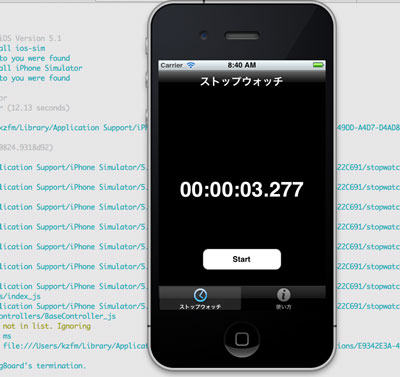
実行
Let's Enjoy!

 Interactive Data Visualization for the Web
 CoffeeScriptファーストガイド モダンJavaScriptによるアプリケーション開発 (NEXTーONE)
 すごいHaskellたのしく学ぼう!
 数学ガール ガロア理論 (数学ガールシリーズ 5)
 チケット駆動開発
 幸せな未来は「ゲーム」が創る
 ステートフルJavaScript ―MVCアーキテクチャに基づくWebアプリケーションの状態管理
 サーバサイドJavaScript Node.js入門
 Titanium Mobile iPhone/Androidアプリ開発入門―JavaScriptだけで作る
 テスト駆動JavaScript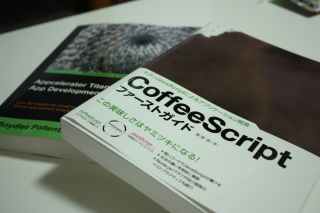
 Appcelerator Titanium Smartphone App Development Cookbook